
Molar Town Hall
Washhouses and fountain – Camí de les roques



The public fountain and laundry
The Romans at the Molar spring
How to get there
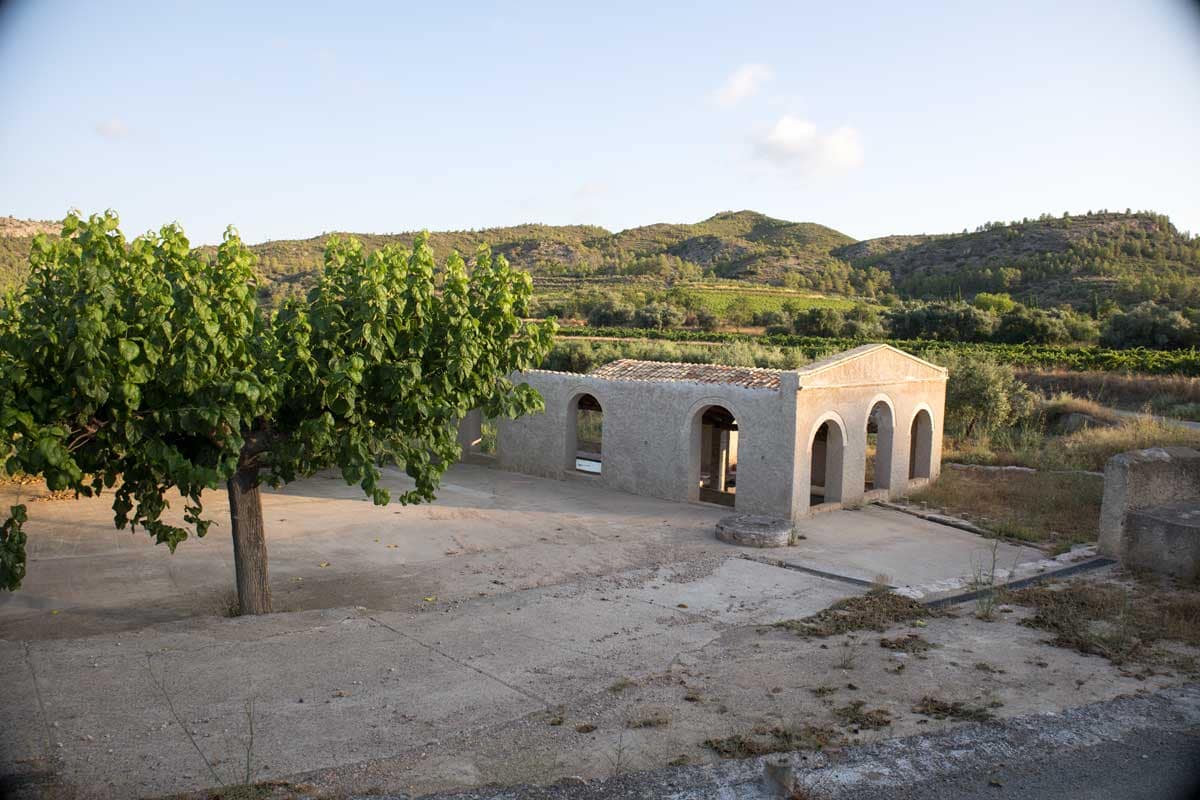
The Public fountain and washing troughs The Molar is a construction of great beauty, with two corridors covered by a roof of reeds and tiles, supported by brick columns and with cobbled floors; in the centre, the two ponds can be seen, with stone sinks and large tiles. The facade of the washhouse has three semi-circular arched “windows” and the access doors are located at either side of the building, behind the two windows at the ends. The fountain itself is not visible as it is covered and channelled towards the ponds of the washers. This space was in use until the 1970s.
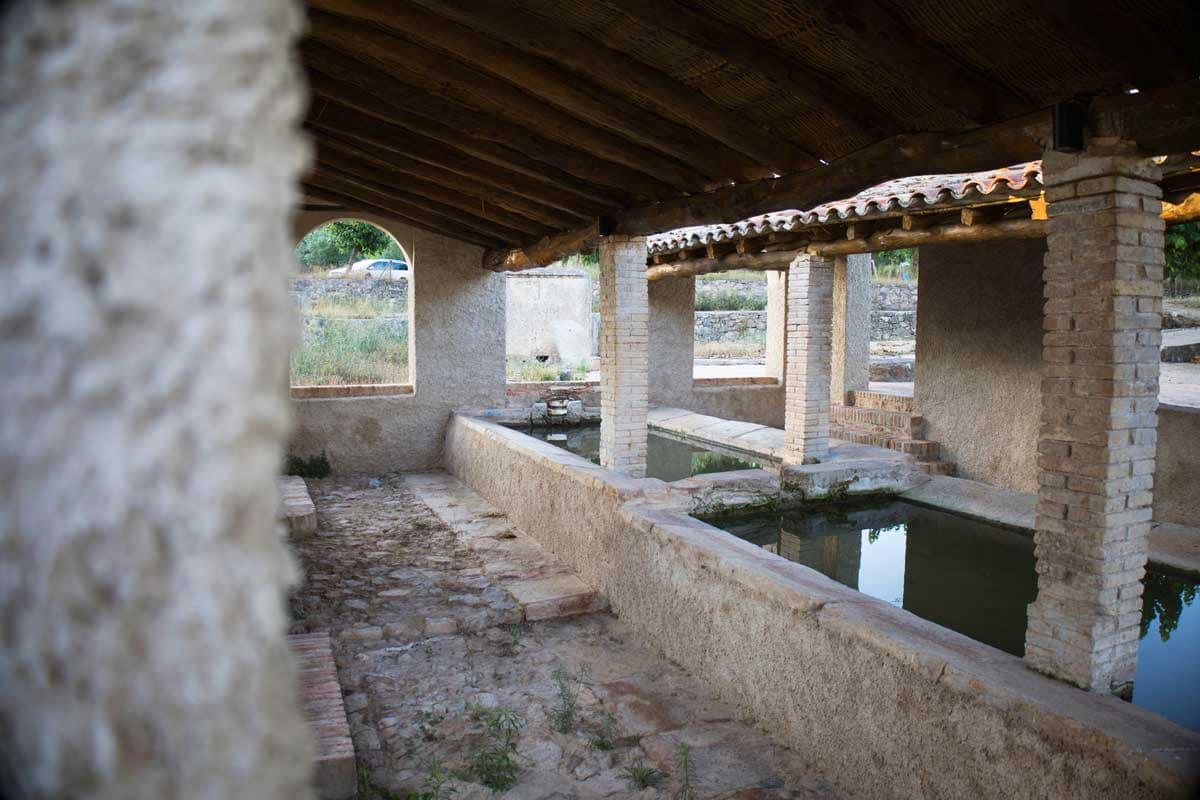
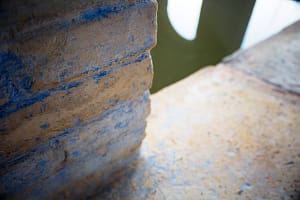
The brick columns still show the Blueberry brands, a blue dye that was used to whiten clothes when they yellowed.

A few metres from the washhouse complex, in the direction of the Calvari settlement, are the remains of an old paved path of uncertain date, although it is known as the “Roman road”The path of the rocks.

The sources of the term
The maps give us the toponymy of springs and ponds in the municipality of El Molar: Font Boja (on the border with the municipality of Lloar), Font del Baster, Font del Mas Abelló, Font d’en Míquei and Font del Perxet (by the Siurana river), Font de Pinyol, Font de Noller or Bassa del Mas del Severino. A memory in words, these water sources, key elements for a land packed with terraced fields (many lost amongst the woods), were named after the areas where they were found, drawing a map of a wealth that, at the time, was worth more than gold. In a land where ravines and the Siurana river itself (which borders part of the municipality of El Molar) are seasonal elements, a spring is a treasure.
This image shows the location of some of the most notable springs in the municipality of El Molar, associated with capricious and much-needed streams and ravines.

Do you want to know more?
The washhouses of El Molar
public fountain and washhouses of El Molar belonged to the Mas d’en Bas (actual Mas d’en Severino), which was the oldest estate of medieval times known to exist and also one of the richest. It was precisely the water that provided its wealth, but this part of the estate was eventually ceded to the town of El Molar (although the owner retained certain rights over the use of the water). The current building dates from the early 19th century, before the Peninsular War. These public washhouses were quite far from the town, but many houses in the settlement had small private washhouses. On Carrer Falset, once water reached the town, some public ones were built.
Continue reading
Before the spring, the people of Molar obtained water from a rainwater cistern, located in the plot named -Molar Ridge-, as well as from the various springs scattered throughout the area. Toponymy still remains as a testament to these past eras and the configuration of the territory, such as the lands of Hortes Velles del Molar, which were built using water from the Rec de Bas ravine. Here we see the great importance of paying attention to the nomenclature of places and areas, as in the case of one of the other springs in the area, the Font Colour, which appears during periods of abundant rainfall, as if by magic, and subsequently disappears like a phantom spring.
Wells and washhouses have, for centuries, been the meeting places for the people of every village, social hubs, protected and cherished places, a source of controversy and quarrels; it was a common right and a shared duty to ensure their survival for the good of all. Time has greatly changed our relationship with water, which now reaches our homes directly, but until the last century these places were full of life.


The Romans at the Molar spring
Although during prehistory the territory of El Molar had been an inhabited area, an industrial site of great importance and a prominent trading centre within the “Priorat” (see the “El Calvari” site); golden ages do not last forever, time passes, the inhabitants abandon the old village and the Ebro becomes the new protagonist of this trade (and yes, everything extracted from the mines seems to travel downstream, the first sign of what will be a period of "poverty").
From this period of Antiquity, we only retain a small, dimly lit window, a few remains of the Roman era what they found in the village laundry area.

Fig. 8. Italian terra sigillata: (1) rim of a Consp. 23.2 cup from Area 6; (2) fragment of a Consp. 11 patera
belonging to the materials deposited at the El Molar Town Hall.
Fig. 10. Marble coticula found in the vicinity of the fountain (area 6?).
Continue reading
Indeed, already in the 1973 publication -Història del Molar- by Àngel Cubells Cubells, there is mention of the existence of Roman remains in this area and, even, of a necropolis (burial ground) at the very foot of the royal road from Lleida to Tortosa. The same Salvador Vilaseca (in the 1930s) found materials, such as Roman pottery and flint (possibly Neolithic), and later found, too, the Dr. Margarida Genera the team of the Dr. Núria Rafel.
It seems entirely logical, of course, that the Romans would have settled in a place with access to such a vital resource as water, in a rather flat area that is still used for cultivation. Although all the information suggests it would not have been a settlement but rather a Roman villa, with a dedicated space for living and another for agricultural production, and even a burial space.
Very few remains of this villa survive, but remnants of buildings and fragments of barrels (ceramic recipients for storing products) and of’Amphora (for storing liquids such as wine and oil, among other products), fragments of Italian terra sigillata (an imported Roman ceramic, originating from the Italian Peninsula, reddish in colour and often decorated with reliefs), remnants of tableware and other various materials that tell us even more about the lives of the villa's ancient inhabitants, such as a fragment of a marble slab from Carrara, intended for the preparation of cosmetic products for the dressing table.
El Molar is not an isolated space during this historical period, inside the well of the Royal Mine (Bellmunt) glow-worms and iron spikes from the Roman period were discovered there; two are also known Romanesque villages in Marçà and Capçanes.
The fountain and the washbasins
The fountain and washhouses of El Molar, dating from the early 19th century, are a construction of great beauty, with two covered passageways with a reed and tile roof and cobbled floors. It is located on the outskirts of the town, approximately 1 km away.
Click here to learn about the history and role of this spring and the other water points in the municipality of El Molar.
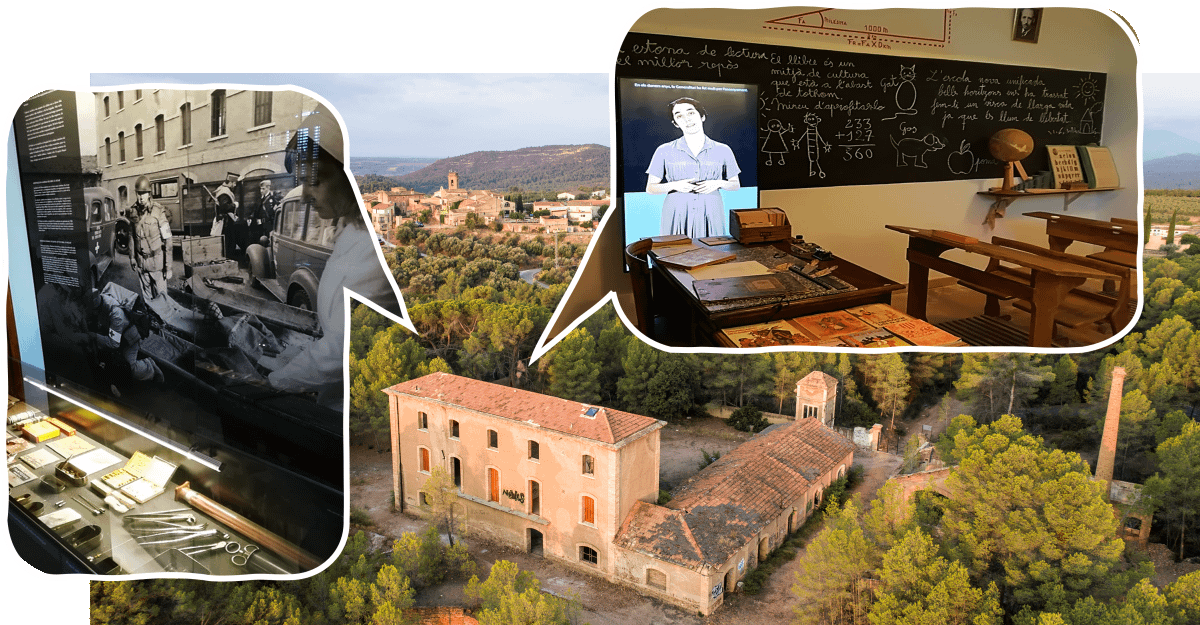
Projection of old photographs of the washhouses and the restoration works of the space, in 2024.
Access and Accessibility
It is possible to arrive by vehicle to this space, and access is possible for people with reduced mobility.
Around the fountain/washing troughs there is a parking area and picnic area (6 tables) with shade, bins, swings and an exercise equipment area.
For the use of barbecues and access to the toilets, as well as for camping permits in this area, you must Contact the town hall.

How to get there
On foot or by vehicle:
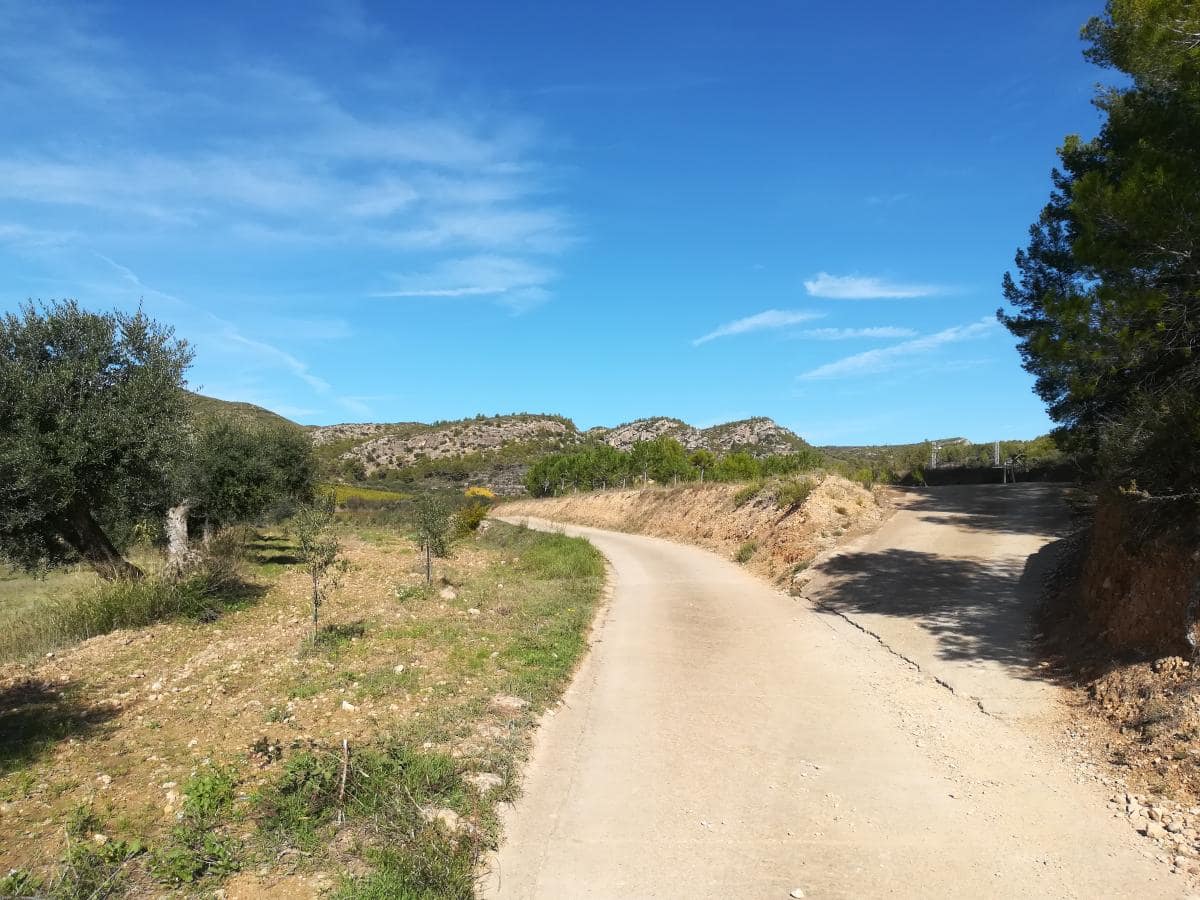
Leaving the village in the direction of Garcia, follow the road for about 500 m until you find a path indicated on the right. Continuing along this path for about another 500 m, you will reach the area of the fountain and washhouses.
It is about 10 minutes away. Easy access.
A little
Leaving the village in the direction of La Figuera, follow the path indicated as El Calvari, on the left, before reaching the cemetery. Upon reaching a fork, follow the signpost for the Font area until you find the old paved path and, subsequently, the washhouses.
It is about 20 minutes away. Medium difficulty access.